Every year, thousands of design studios launch sleek portfolio websites that win applause from fellow architects—yet quietly fail to generate a single high-ticket client inquiry.
In 2026, the best architecture and interior design websites achieve a rare balance: museum-grade editorial beauty paired with sub-second engineering and frictionless conversion.
Let's break down the 5 defining traits of top-performing studio websites in 2026—and how to apply them to your own practice.
1. Editorial Restraint Over Visual Noise#
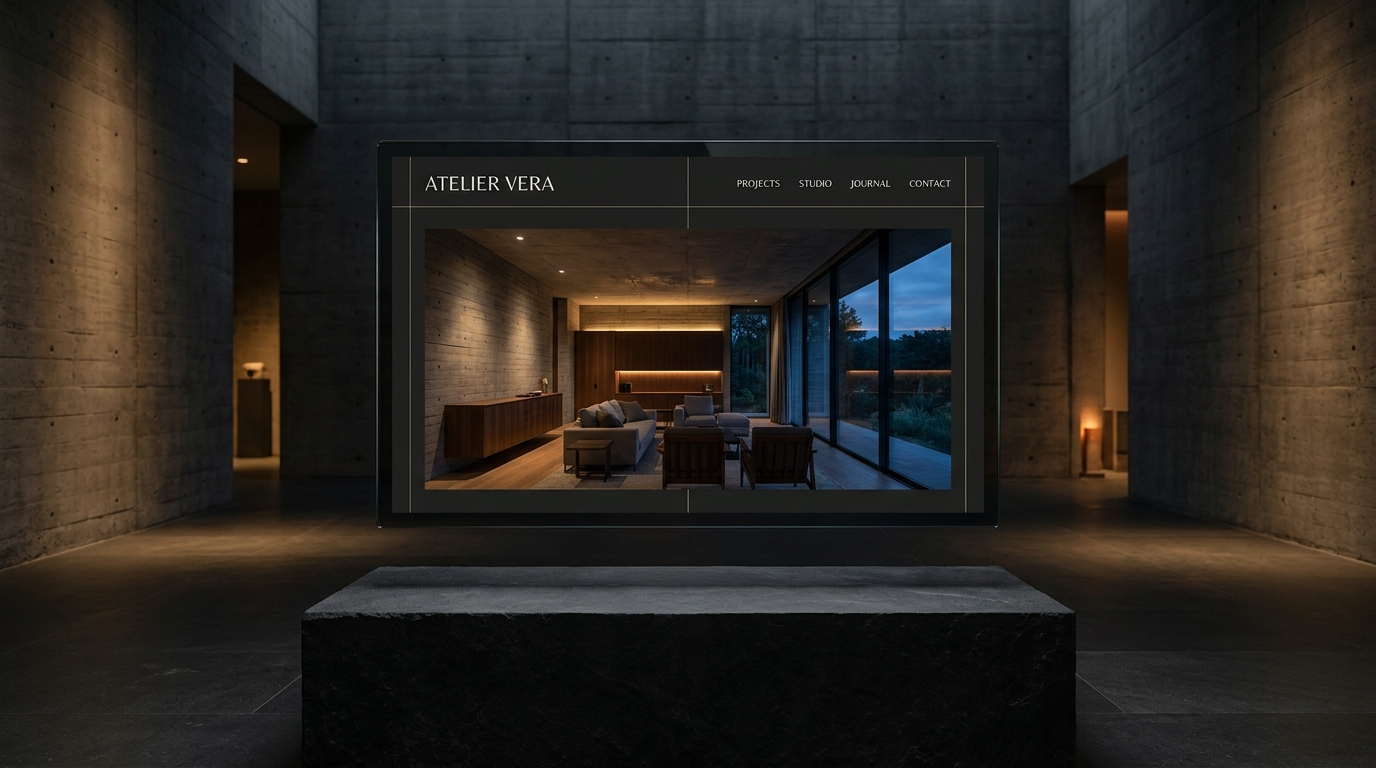
The highest-converting luxury residential and commercial studio sites share a deliberate sense of calm:
- Generous Negative Space: Letting architectural photography breathe without cramped 4-column grids or cluttered badges.
- Serif + Neo-Grotesk Typography: Pairing refined display serifs (like Cormorant Garamond) for spatial headlines with ultra-legible sans-serif UI copy (Geist or Plus Jakarta Sans).
- No Pop-Up Spam: Discerning HNW clients immediately close sites that throw a "10% OFF NEWSLETTER" modal two seconds after landing.
2. Sub-Second Image Pipelines (Passing Core Web Vitals)#
In 2026, mobile traffic accounts for over 65% of initial studio research. The best sites never force visitors to download raw 12 MB PNG renders:
- Responsive
srcsetsizing paired with next-gen WebP/AVIF compression. - Crisp hero visuals under 250 KB so Largest Contentful Paint (LCP) lands under 1.8 seconds.
- (You can optimize your own renders instantly using our free ArchCompress Tool.)
3. Interactive Spatial Storytelling (WebGL & Scrollytelling)#
Static slideshows feel dated. Leading digital flagships use subtle, architectural motion—progressive lighting reveals, tactile material hover states, and depth-driven transitions—that mirror walking through a physical space without sacrificing frame rate.
4. Narrative Case Studies Instead of Bare Photo Dumps#
Top studios no longer drop 30 unlabeled photos onto a project page. Each flagship case study answers:
- The Architectural Brief (Site constraints, client vision, scale).
- Spatial & Material Decisions (Why certain stones, lighting, and structural moves were chosen).
- Measurable Outcome (Area, completion timeline, or commercial ROI).
5. Frictionless, Budget-Gated Consultation Funnels#
Every project showcase ends with a natural invitation to connect—backed by a streamlined, high-trust consultation intake that respects the principal's time.
Want to benchmark your current studio site against 2026 standards? Run an instant check on our free Studio Website & SEO Grader, or book a Strategy Session with DSpace360 to craft your studio's next digital flagship.