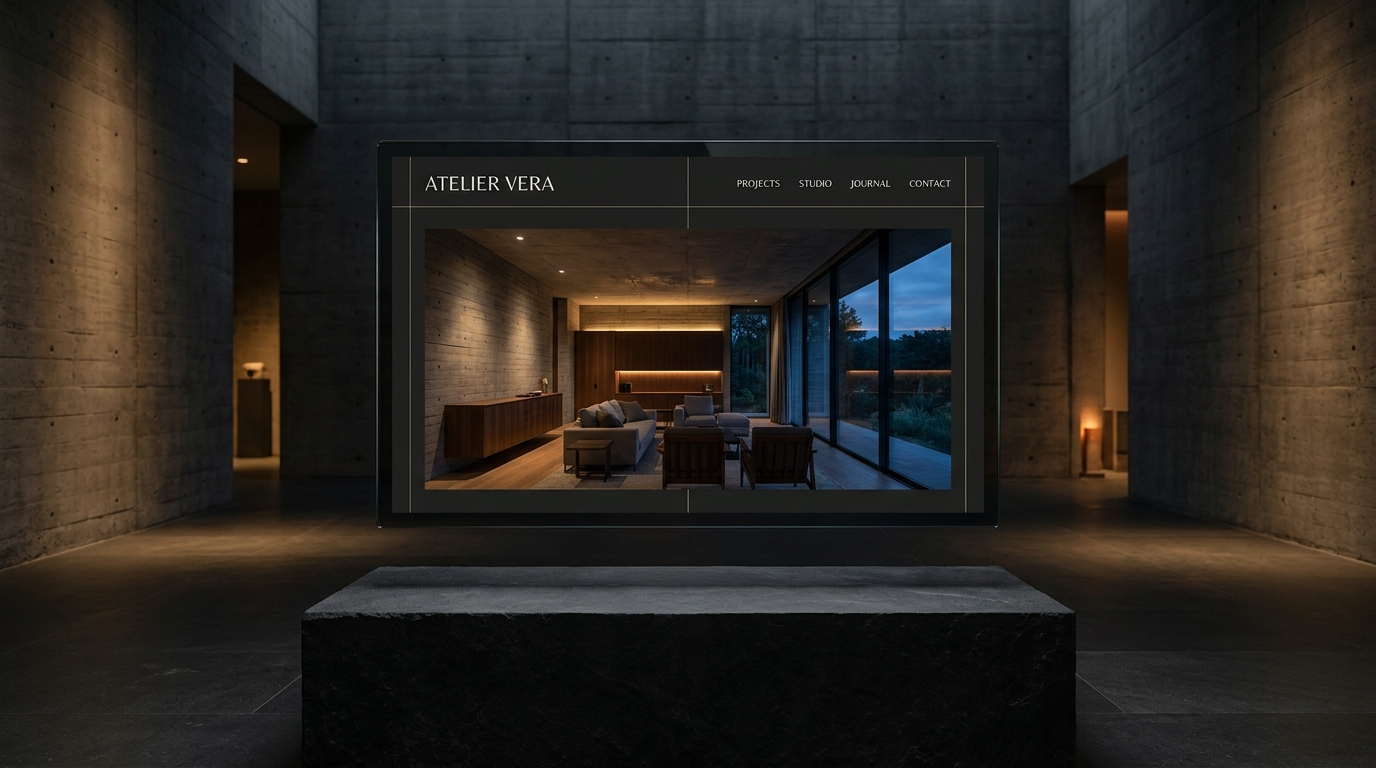

When an architectural practice or interior design studio invests in a new digital flagship, the platform decision shapes everything from Google Search rankings to how high-net-worth (HNW) clients perceive your spatial craft.
Choose the wrong stack, and your 4K project photography crawls at 7 seconds on mobile. Choose the right stack, and your portfolio becomes a sub-second authority engine.
Here is an unfiltered comparison of WordPress, Webflow, and Custom-Coded Websites specifically for architecture and interior design portfolios.
Quick Comparison Matrix#
| Factor | WordPress (Theme/Elementor) | Webflow | Custom-Coded (Vite / WebGL / Static) |
|---|---|---|---|
| Mobile Speed & Core Web Vitals | Often slow (plugin bloat) | Good if carefully optimized | Sub-second (95–100 Lighthouse) |
| 3D / Interactive Storytelling | Very limited | Basic scroll animations | Unlimited (Three.js / Custom WebGL) |
| Maintenance & Security | High (constant plugin updates) | Low (managed hosting) | Zero plugin vulnerabilities |
| Technical SEO & Schema | Relies on Yoast/RankMath | Clean HTML, limited JSON-LD | Full custom JSON-LD & GEO control |
| Perceived Brand Prestige | Generic if template-based | High editorial polish | Bespoke museum-grade flagship |
1. WordPress: The Familiar Workhorse (With Hidden Costs)#
WordPress powers over 40% of the web, and for good reason—it is easy to spin up a portfolio theme quickly. However, for luxury design studios, WordPress introduces three recurring bottlenecks:
- Heavy Page Builders: Visual builders like Elementor or WPBakery inject dozens of CSS/JS files on every page load, dragging mobile Lighthouse scores down into the 30–55 range.
- Unoptimized Render Libraries: Uploading raw architectural photography without automated WebP/AVIF pipelines quickly balloons page weights past 15 MB.
- Security & Plugin Fatigue: Studios routinely wake up to broken layouts after theme or plugin auto-updates.
Best for: Emerging studios testing their very first online presence on a tight budget.
2. Webflow: Strong Editorial Control for Mid-Tier Studios#
Webflow bridges the gap between visual design freedom and cleaner HTML output. Design directors appreciate its grid control and built-in CMS for publishing project case studies.
Where Webflow shines:
- Clean semantic markup without PHP plugin bloat.
- Smooth editorial typography and responsive grid layouts.
Where Webflow hits a ceiling:
- Custom 3D & Spatial Interactivity: True WebGL lighting, custom shaders, or complex scroll-docked 3D architecture models require custom engineering outside Webflow's native designer.
- CMS & Bandwidth Limits: High-traffic studios with heavy video/image assets often run into steep hosting tier upgrades.
Best for: Boutique studios wanting clean editorial layouts without maintaining custom codebases.
3. Custom-Coded Architecture (Vite / Static Edge / Three.js)#
For established interior architects and luxury spatial studios competing for ₹1 Cr+ or $150K+ commissions, a custom-coded static flagship deployed on a global edge CDN delivers an unfair advantage:
- Instantaneous Load Speeds: Zero database queries and zero unused JavaScript mean pages render in under 1 second—boosting Google SEO rankings immediately.
- Bespoke Spatial Craft: Interactive lighting transitions, custom architectural scroll choreography, and tailored lead qualification funnels that no template can imitate.
- Full GEO & Schema Control: Native
ProfessionalService,FAQPage, andllms.txtarchitectures built directly into the markup so AI search engines recommend your studio accurately.
Want to see how your current site stacks up right now? Run a live diagnostic with our free Studio Website & SEO Grader or compress heavy portfolio renders before uploading using ArchCompress.
The Verdict for Design Principals#
If your average project fee exceeds ₹15 Lakhs ($20,000+), your website cannot look or load like a $49 theme. Every second of mobile lag quietly signals carelessness to discerning clients.
Ready to upgrade your studio into a high-converting digital flagship? Book a complimentary Strategy Session with DSpace360.